 FaithSow
When your child pushes another child over a toy
Two children reach for the same toy. One grabs it, then pushes the other. In that moment, the first job is to stop the pushing and check on the child who was pushed. A question about taking turns can wait until everyone is safe enough to talk.
FaithSow’s public situation page, “Pushing when competing for a toy,” gives parents a starting point for the later conversation: “How could you talk when you both want the toy?” Use it to practise saying what a child wants without hurting someone. Wanting the toy does not make pushing acceptable, and being pushed does not oblige the other child to surrender it.
Stop the pushing before asking a question
The page’s parent note starts with a firm, calm safety boundary. Stop the pushing and check on the child who was pushed before helping your child settle. Acknowledging the wish to play and practising requests, turns and repair come afterward.
You might say, “I won’t let you push. First, I’m checking that everyone is safe.” Keep the immediate boundary brief rather than trying to teach a whole lesson while the children are still reaching, grabbing or upset. If it is not yet a safe moment for conversation, leave the question for later.
Once there is room to talk, you can acknowledge the wish without approving the action: “You really wanted that toy. You can tell me that. Pushing hurts someone.” These are suggested parent words, not quotations from FaithSow or a script that promises a particular response.
Find the situation that matches what happened
In FaithSow’s English Friendship category, choose the situation about pushing while competing for a toy. You can also open the English toy-pushing situation directly.
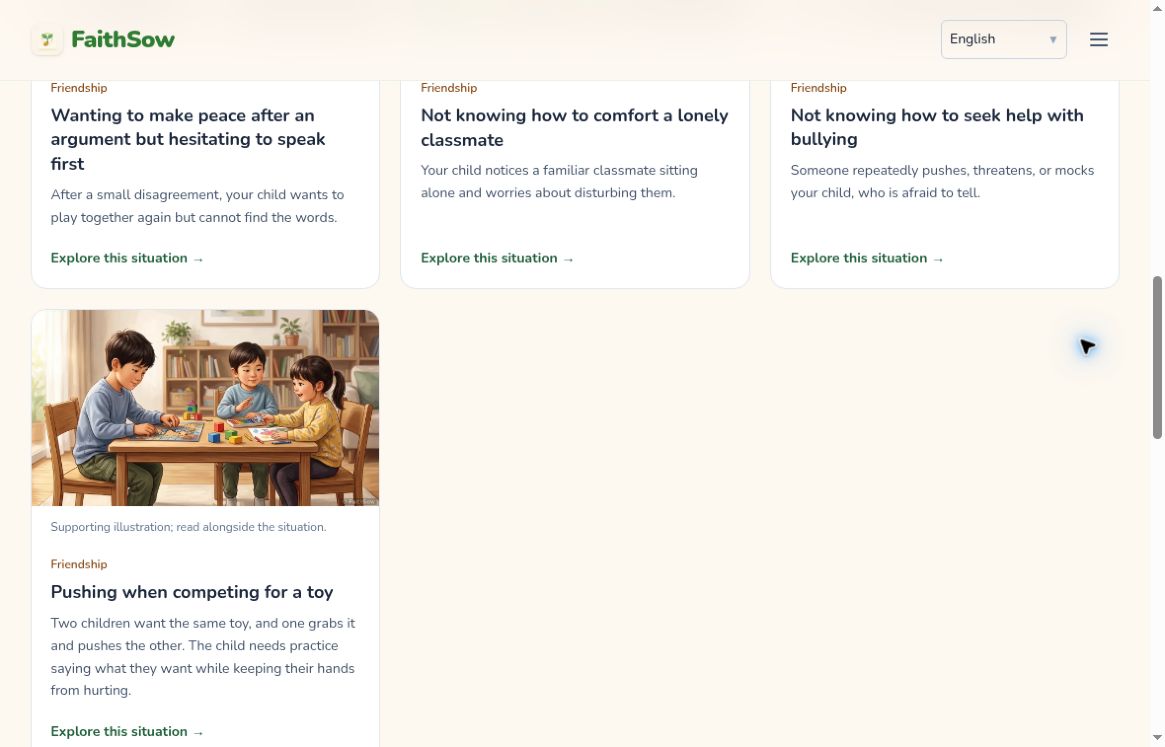
Read the description with the picture. It describes two children wanting the same toy, with one grabbing and pushing. The supporting illustration shows children at a table; it does not depict the pushing itself. Use the words to establish what you are discussing rather than asking your child to find a push in the picture.
This moment needs more than a general reminder to share. The immediate issue is someone being pushed. You can use the situation to talk about wanting a turn while keeping the safety boundary and the other child’s current play in view.
Practise words for wanting a turn
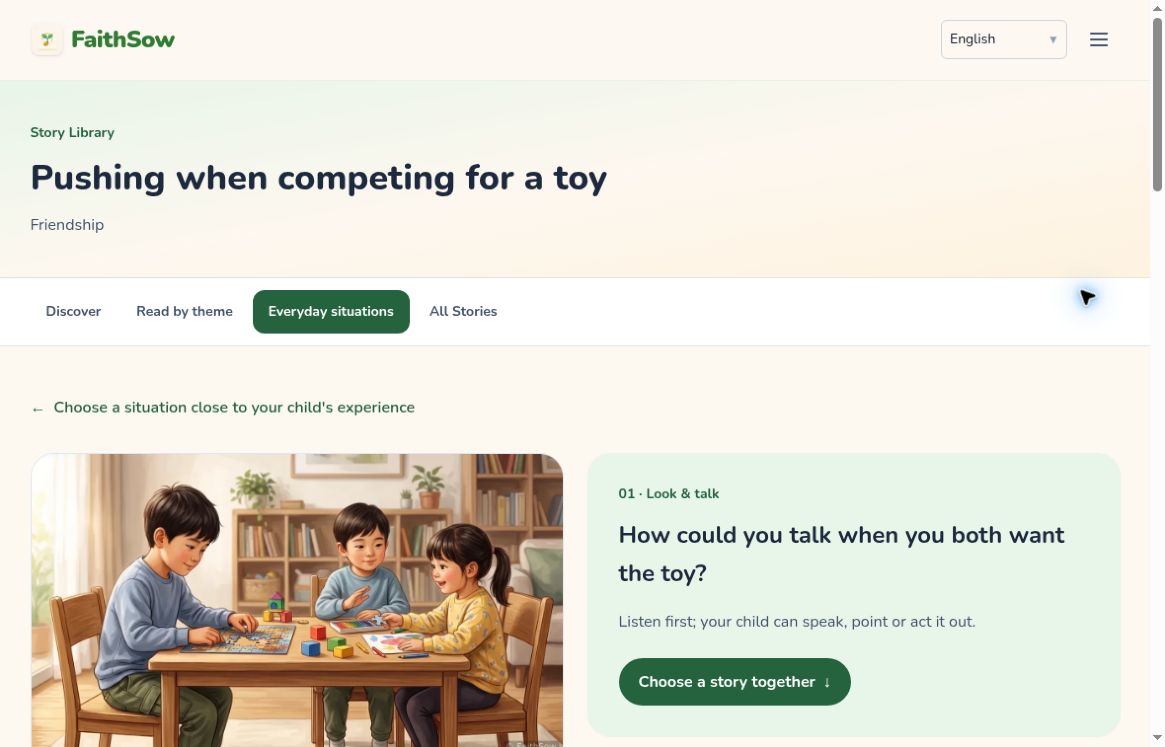
When your child is ready, ask the page’s question and leave room for their answer. The page allows speaking, pointing or acting out a response. They do not need to give a long explanation before you can help them find a usable request.
For example, a child could practise “I want a turn,” followed by “Can I have a turn when you’re finished?” You can model the words or let them point to the toy and help put that wish into a sentence. If you act it out, practise the request, not another push.
A request leaves room for an answer. Saying the words does not guarantee that the toy becomes available immediately. If the other child is still using it, help your child understand what happens next: wait for an agreed turn, choose something else for now, or pause the play. Do not promise a turn that the other child has not agreed to.
Keep the other child’s turn and choice intact
FaithSow’s parent note explicitly says not to require the child who was pushed to give up the toy. Avoid solving the noise or distress by handing that toy to the child who pushed. The adult can help arrange turns without making the pushed child responsible for calming everyone down.
When both children are ready, make any turn-taking plan clear before trying again. Ask what they can agree to, rather than treating “sharing” as an order to hand something over right now. If they cannot agree yet, you can pause the joint play instead of forcing an immediate exchange.
Making amends can be a separate conversation after safety has been addressed. You might help your child ask whether the other child wants space or offer to help restore something knocked over. Do not require a hug, a repeated apology or an immediate return to playing together. A repair attempt does not entitle anyone to the toy or to a particular response.
Use a story only if it fits the next conversation

The public page recommends three stories: Abram and Lot Separate, Fruit of the Spirit, and Brothers reunite and reconcile. Their short descriptions connect the situation with talking through competing wishes, self-control and a relationship hurt by pushing. These are recommendation summaries, not a review of the full stories.
The three recommended story cards display sign-in or story-access requirements. Check current access before planning to read. You can use the public situation question without opening a recommended story, and a recommendation should not be presented as universally free.
If your child wants to read later, preview one story and decide whether it fits what happened. Do not use reading as a condition for getting comfort, require the other child to listen, or suggest that finishing a story settles the conflict. The immediate boundary and the turn-taking decision still need adult attention.
Begin with the public situation when everyone is ready
Open the English toy-pushing situation to read the question and expand the parent note. You can then put the screen away and practise one request together. The page can help start a conversation; it does not replace stopping the pushing and caring for the other child.
If you later want the app, the same page has an optional app-download section. Installation is not a prerequisite for this conversation. FaithSow includes both free and paid content, so check access rather than assuming every recommendation is included.
FaithSow uses AI-assisted story content and illustrations. Treat the image as supporting material, preview stories and check their Bible sources before sharing them. For now, a useful next step is modest: stop the pushing, attend to the children, and help your child ask for a turn without taking one by force.