 FaithSow
When your child loses a game and does not want to play again
The game ends, and your child pushes the pieces away. They may want another score, another rule or no more game at all. You do not have to turn that moment into a lecture about being a good loser—or rush straight into a rematch.
A smaller first step is to offer a pause and find out whether your child wants to express what happened. FaithSow's public situation page gives parents a question for this moment: “After losing, would you like a break or to share how you feel?” You can use that question without starting a story or downloading an app.
Make room for a break without changing the result
A break and a changed result are different things. You can stop playing for now while leaving the agreed score and rules as they are. The parent note on FaithSow's situation page pairs acceptance of disappointment with fair rules; it does not ask a child to become happy immediately.
For example, you might say, “You wanted to win. We can take a break. This round's result stays the same.” This is a suggested parent response, not a quotation from the app or a formula that guarantees a calmer child.
If game pieces are being pushed or thrown, move them aside and attend to immediate safety before continuing the conversation. Listening to disappointment does not require allowing someone to get hurt. You can return to the question later rather than trying to finish a lesson while everyone is upset.
Open the situation that matches this moment
On the English FaithSow website, the route observed was the home page's family-growth area, then the feelings-and-setbacks category, then the situation about not wanting to play after losing. You can also open the losing-a-game situation directly.
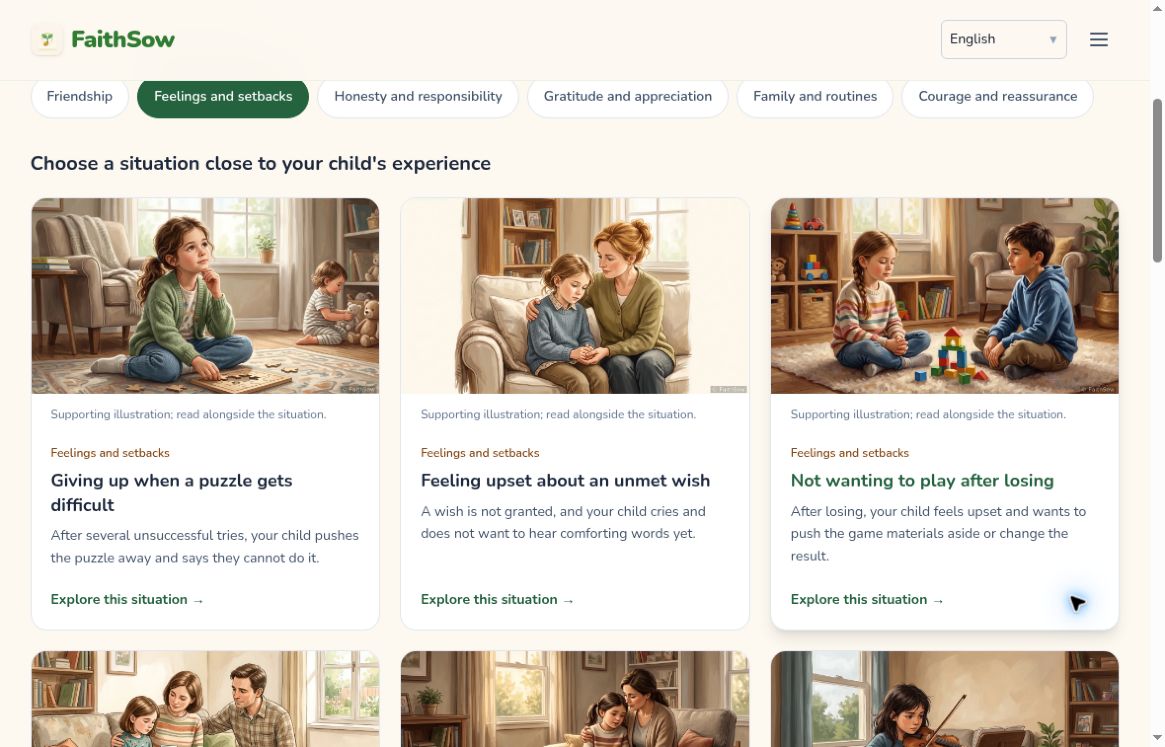
Check the description before using it: this page concerns a child who is upset after a loss and wants to push the game materials aside or change the result. It is not a lesson about operating an in-app memory game, and it does not assume a disagreement with a friend needs an apology.
The illustration is a conversation aid, not a record of your child or an assessment of their emotions. You can look at it together, or read the question yourself and then put the screen away.
Ask once and leave room for the answer
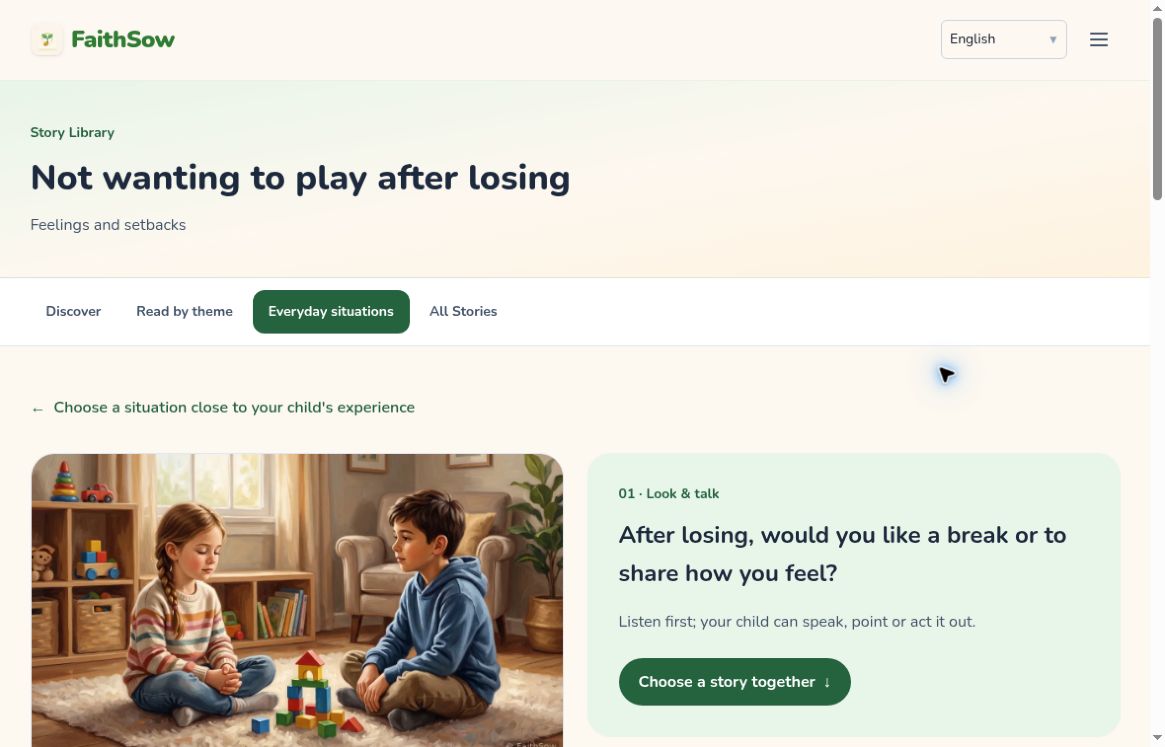
Offer the choice between taking a break and sharing a feeling. A break is a real option, not a test whose correct answer is to talk. If your child chooses it, you do not need to immediately follow with more questions.
If they do want to respond, the page suggests more than spoken words: a child can point or act out a response. You might listen to a few words, notice what they point at, or let them show the moment with a gesture. Do not require a polished explanation.
Avoid putting the answer in their mouth. “You are angry because you cannot stand losing” makes an assumption; “What would you like me to know?” leaves room for their own account. These are optional conversation examples, not prompts that FaithSow automatically generates or evaluates.
If your child says nothing, you can leave the invitation open. There is no score to earn for naming an emotion, and this page does not diagnose a child or promise a particular emotional outcome.
Decide what happens next without forcing a rematch
After a pause, ask whether your child wants to end the game for now or consider playing later. You do not need to promise an immediate win, alter the finished round or demand another attempt as proof of good behaviour.
If you discuss a different way to play next time, agree on it before that next round rather than rewriting the result after someone loses. Keep that conversation separate from whether your child is allowed to feel disappointed.
The aim is not to make the child smile on cue. It is to give the family a usable next step: stop safely, listen if invited, and make a clear decision about whether the game is finished for now.
A story is an optional next step
Only after listening, consider whether your child wants to look at a story with you. The situation page offers three recommendations. Its short descriptions connect them with contentment, disappointment, caring for others and comparison.

The three recommended story cards display sign-in or story-access requirements. Check each story's current access before reading; the situation question can be used without opening a recommendation.
Do not make reading a punishment for losing, a condition for being allowed a break or a way to insist on immediate happiness. If your child is not interested, stop with the conversation or the pause. Preview any story you choose and consider whether it fits what your child actually said.
Start with the question rather than an installation
Open the English losing-a-game situation, read its opening question, and choose whether to use it with your child. This link opens a public web page, not a story session, account registration or automatic assessment.
If you later want the app, the public page also has an optional app-download section. Downloading is not the first step required for this conversation. FaithSow includes both free and paid content, so check access before choosing a story.
FaithSow uses AI-assisted story content and illustrations. Treat the picture as supporting material, preview stories and check their Bible sources before sharing them. For this moment, one sincere offer of a break or a chance to be heard is enough to begin—you do not have to finish a lesson or restart the game today.