 FaithSow
When Your Child Wants to Make Peace but Is Afraid to Speak First
Start with the words that feel difficult
Your child wants to play with a friend again, yet refuses to be the first to speak. Before suggesting an apology or arranging a reunion, try one question from FaithSow: “What is hardest to say when you want to make peace?” Ask it before shared reading, then leave room for an answer. The aim is to understand the difficult part, not to produce a perfect apology on demand.
A child might fear being ignored, feel embarrassed about what happened, or still want their friend to understand their side. These are possibilities to listen for, not explanations to assign. You can begin with a short conversation and decide together whether a story or a little practice would be useful.
First open the specific friendship situation
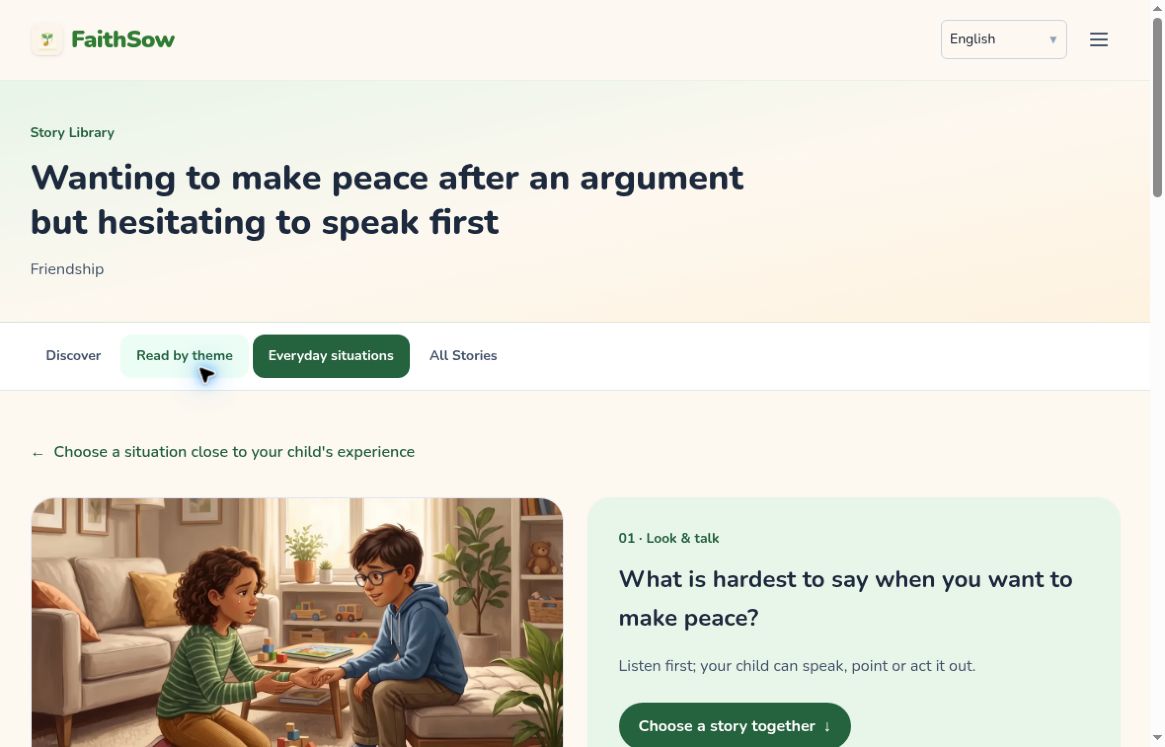
Open the official FaithSow situation page linked below in your browser. It describes a small disagreement after which a child wants to play together again but cannot find the words. This direct link takes you to the relevant public Web page; you do not need to start by downloading a native app.
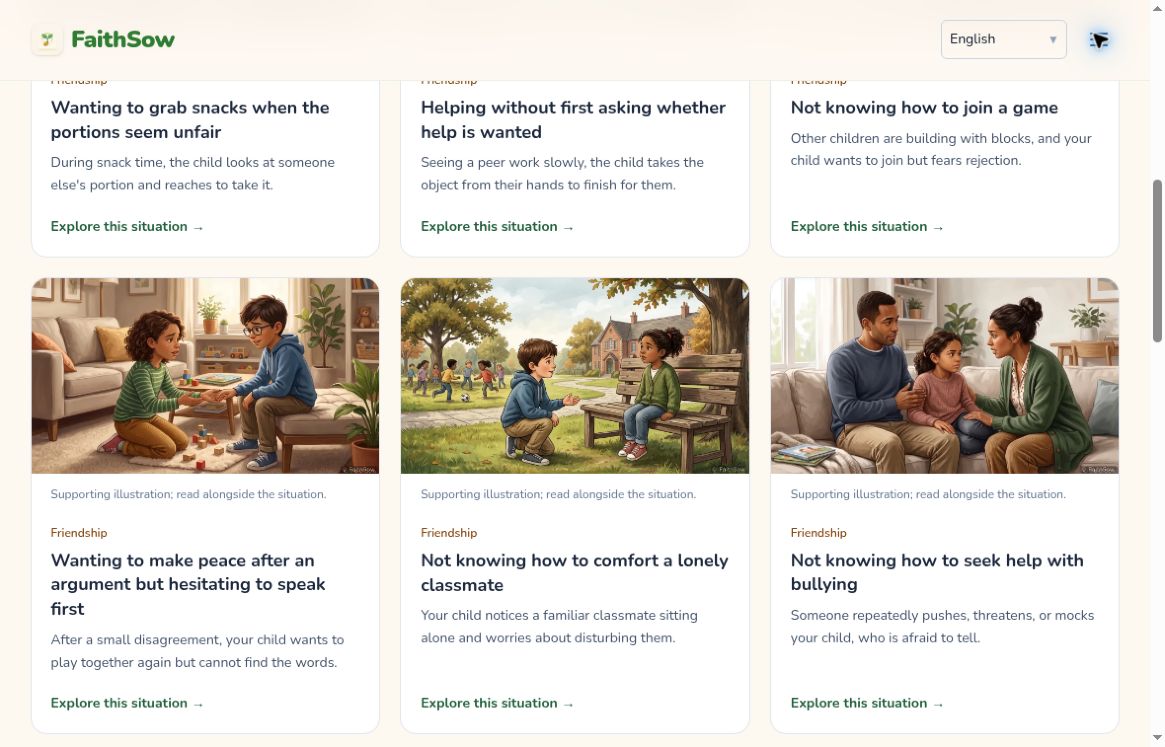
The first screenshot shows the matching card among friendship situations. Check that its description fits what happened. A routine disagreement and repeated bullying need different responses; choosing a relevant situation matters more than completing a reading activity.
Read the question before choosing a story
On the detail page, find “01 · Look & talk.” Read the question aloud once, without turning it into a test. You might introduce it with, “We can look at this together. You don’t have to decide what to do yet.” That invitation is an optional parent example, not a FaithSow button or scripted requirement.
If your child answers, reflect the specific concern before offering advice. For “They might say no,” try, “You’re worried they won’t want to play.” Avoid immediately promising that the friend will welcome them back. You can help prepare a first sentence without knowing how someone else will respond.
Let the answer be spoken, pointed to or acted out
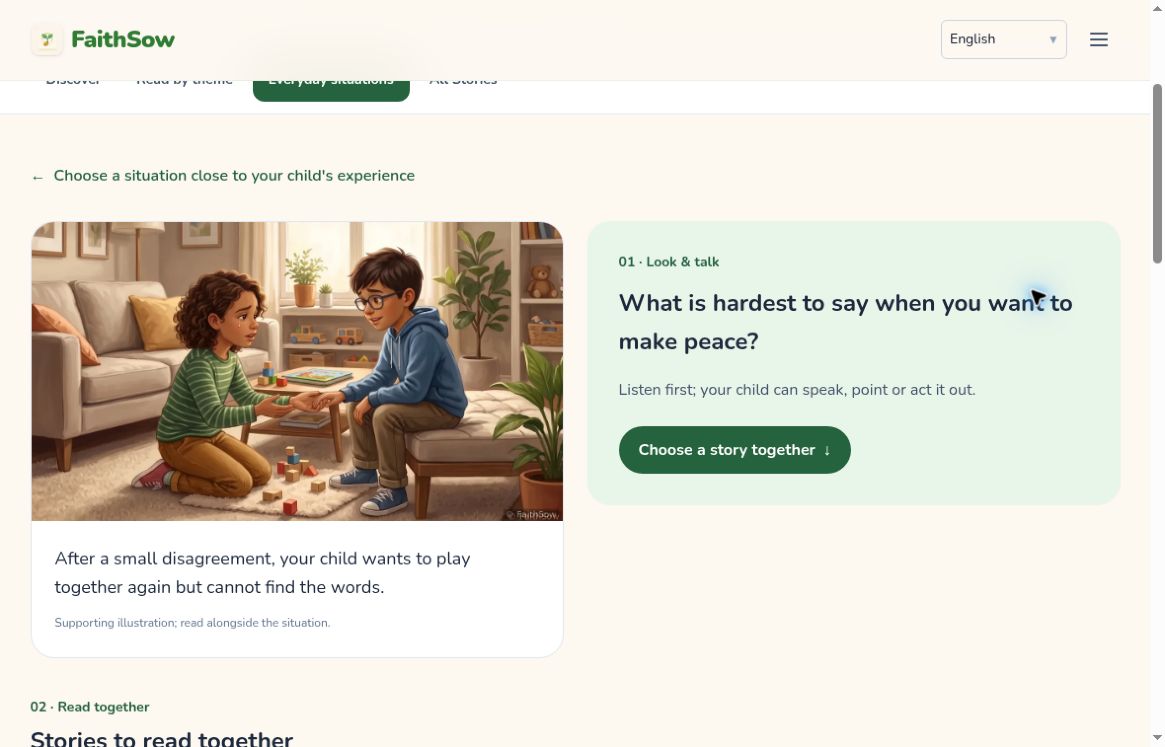
The page invites parents to listen first and allows the child to speak, point or act out a response. A child who does not want to explain their own argument could begin by pointing to the supporting picture. You can listen to what they notice without insisting that either illustrated character represents them.
For an optional role-play, offer to be the child who wants to reconnect while your child watches or chooses a line. Stop if they do not want to participate. Silence can be the end of this attempt; it does not need another round of questions. You can leave the page and return another time.
Practice one opening line only if your child wants to
If your child asks for help finding words, offer a choice that matches what they actually mean. “Could we talk about what happened?” opens a conversation. “I’m sorry I knocked your blocks over. Can I help rebuild?” names a specific action and possible repair. “I want to play again, but I didn’t like being called that name” combines an invitation with a boundary. These are optional practice examples, not lines children must repeat.
Let your child shorten or change the sentence. You could rehearse once with toys, say it quietly together, or stop after choosing the words. Also prepare for “not now”: the friend may need space. Speaking first is an invitation to talk, not a promise that the disagreement is finished.
Choose a story after listening
When you are ready, use “Choose a story together” to reach the related reading section. The page lists Brothers reunite and reconcile, Abram and Lot Separate, and A Voice in the Wilderness. Choose one that interests your child rather than treating the list as an assignment. The story links require sign-in or the relevant story access; the public situation page is not a promise of unrestricted full-story reading.
During a story you can access, pause where your child notices someone taking a first step, listening, or repairing an action. Ask what they noticed before connecting it to their own friendship. They may want to discuss the characters without discussing themselves. After reading, offer a choice: practice a sentence, think longer, or leave it for today.
Keep reconciliation voluntary and safe
Use this conversation for an ordinary disagreement where reconnecting is something your child wants. Do not require an apology for feelings, a hug, or renewed contact. If your child describes repeated threats, humiliation, or physical harm, prioritize their safety and help from a trusted adult or school staff rather than rehearsing a return to the friendship. A reading prompt cannot establish that contact is safe.
Common questions
What if my child says “I don’t know”? Accept the answer. Offer to look at the picture together or stop. The question is an opening, not a task that must be finished.
Should I tell my child to say sorry first? First listen to what happened and what they want. If they harmed someone, you can discuss that particular action and a possible repair without demanding instant forgiveness or renewed friendship.
Can we use the question without reading a story? Yes. The conversation prompt is visible on the public situation page. You can stop there; opening a recommended story is a separate step with its own access requirements.
Will this make the children friends again? No outcome is guaranteed. A useful stopping point might simply be your child identifying what feels hard or choosing words they may want to try.
Begin with one question today
Open the official FaithSow situation below, read the question together, and listen before choosing a story. You do not need a complete solution to the argument before you begin. Let your child help decide the next step.