 FaithSow
When Your Child Keeps Asking “How Much Longer?”
You are standing in a queue or waiting for a family member. Your child asks how much longer it will take, then asks again. You may not have an exact answer. A useful starting point is to share what you actually know and choose something quiet to do together, rather than promise that the wait is nearly over.
FaithSow has a public situation page for this specific moment. It offers a conversation question, suggested stories and an expandable parent note. You can begin with the question without opening a story or installing the app.
Start with the wait you are actually facing
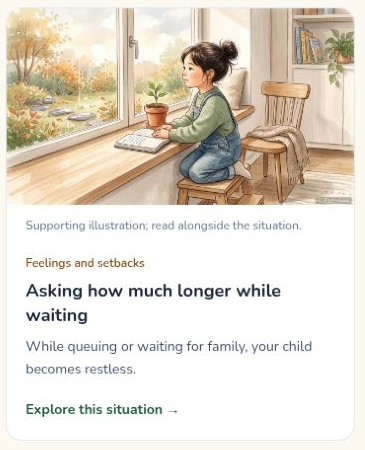
In FaithSow's Everyday situations collection, choose Feelings and setbacks, then the situation about asking how much longer while waiting. Its description concerns a child becoming restless while queuing or waiting for family. This is a different starting point from losing a game or arguing over a toy.
Before opening the page with your child, put what you know into a short sentence. For example: “We are waiting for our turn. I don't know exactly how many minutes.” This is an example for parents, not a line spoken by the app. If you have a reliable update, share it. If you do not, leave the timing uncertain rather than inventing a countdown.
Ask what you can do together
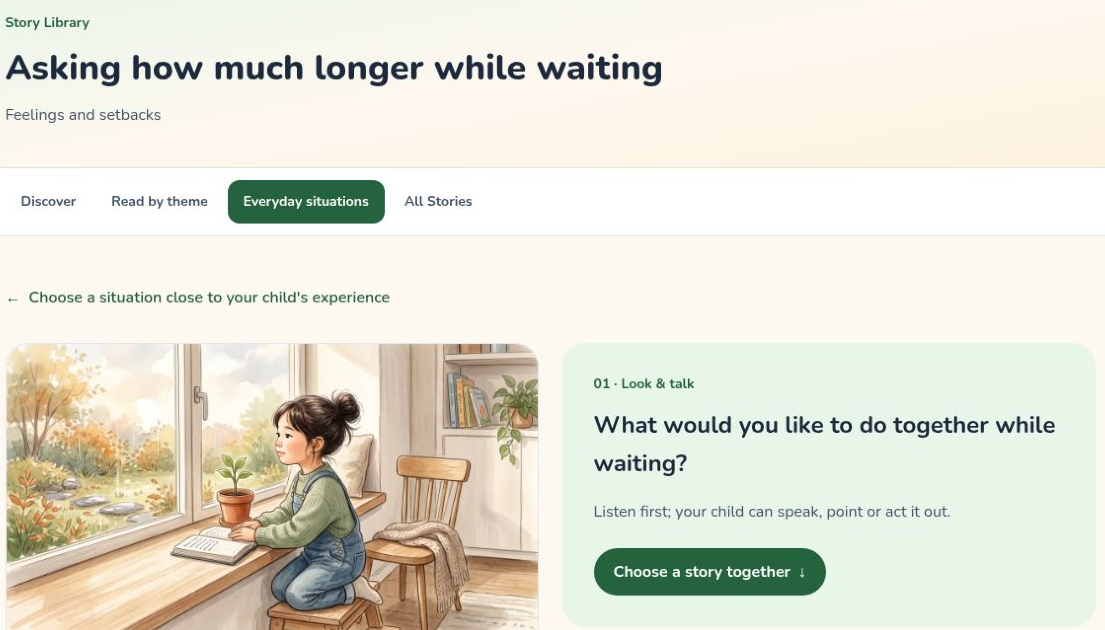
The page asks, “What would you like to do together while waiting?” It also allows children to respond by speaking, pointing or acting something out. You do not need to turn the moment into a test of reading or vocabulary.
If an open question is too much for the moment, offer two practical choices you can genuinely join in. For example: “Shall we look for three round things, or quietly tell each other what we can see?” Those are suggested parent activities, not FaithSow buttons or games. Keep the choice suitable for the place you are waiting and stay attentive to your surroundings.
Your child may still feel impatient. Choosing an activity does not guarantee silence or make the queue move faster. You can acknowledge that waiting is difficult and continue the activity together without demanding a cheerful response.
Read the parent note before asking for independent reading
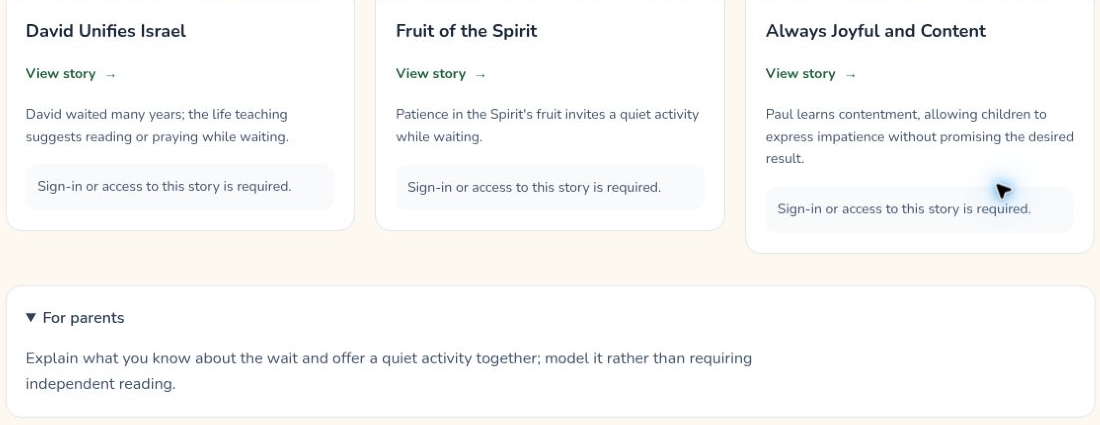
Expand For parents on the situation page. The note recommends explaining the known arrangements and sharing a quiet activity, with an adult demonstrating when needed rather than requiring the child to read alone.
This makes the adult's role concrete. If you suggest looking at a book, sit with your child and begin together. If there is no suitable space for a story, keep the conversation short and return to reading later. You do not have to finish a lesson to use the question.
Choose a story only if it fits the moment and your access
The waiting page recommends three stories: David Unifies Israel, Fruit of the Spirit, and Always Joyful and Content. The public descriptions connect them with waiting, patience and expressing impatience without a promised outcome. They are suggestions for shared reading, not a promise that a story will immediately change a child's behaviour.
All three recommended story cards show a sign-in or story-access requirement. A recommendation does not mean the full story is free to read. Check your access before promising to read one; the situation question remains useful without opening a story.
A small plan for the next wait
Try a simple sequence: say what you know, ask what you can do together, and join your child in one quiet activity. If the arrangements change, explain the change. If you later read a story together, you can return to the waiting moment without treating it as a behaviour score.
You can start on the public waiting situation page. Its conversation question is the first step; downloading the app is optional for that step.