 FaithSow
When your child spills water and says someone else did it
A cup tips over. Your child starts to walk away, or says another person knocked it over. You want to hear what happened without turning a small accident into a judgement about who your child is. The immediate task is simpler: check the area, listen to the account, and work out which part belongs to whom.
FaithSow has a public situation page for this moment. Its question gives children a way to practise telling an adult about a spill. The parent note keeps two boundaries together: check safety first, and ask children to own their part rather than someone else's fault.
Start with “How could you tell an adult that water spilled?”, then expand For parents. You can use the question and note without opening a full story.
Deal with the spill before asking for an explanation
An adult can check the area before beginning the conversation. If the situation involves a broken cup or another hazard, keep the child away from it and let an adult handle that part.
Once it is safe to talk, describe what you can see without adding an accusation. For example: “There is water on the floor. Tell me what happened.”
A spill alone does not tell you who caused it or whether it was deliberate. Leave room for an explanation you have not heard yet. If more than one person was involved, listen before deciding what each person did.
Practise telling an adult what happened
The public page asks, “How could you tell an adult that water spilled?” It also invites children to speak, point or act something out. You can start with that question instead of asking your child to repeat a confession you have already written for them.
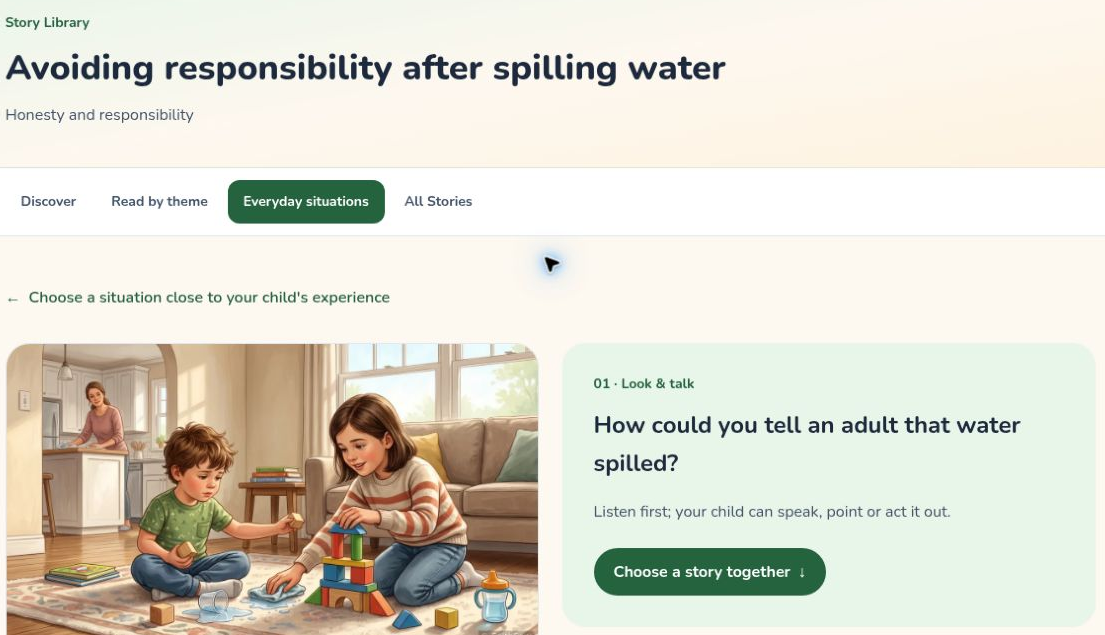
For a child who did knock the cup over, an optional practice sentence is: “I knocked the cup over. There is water here. Can you help?” If the child did not cause it, the account should say that. Practising honesty should not require a child to accept an inaccurate version of events.
You can acknowledge a clear account with a simple “Thank you for telling me.” Then decide what happens next. Keep this moment focused on what happened and what can be done now.
Separate taking responsibility from taking all the blame
FaithSow's expanded note says: “Check safety first and listen to the facts; children own their part, not someone else's fault.” That last boundary matters when a sibling or another child is nearby.

Helping with a spill and causing the spill are different things. A child may choose to help without admitting responsibility for something they did not do. Equally, blaming someone else does not replace describing one's own part.
After an adult checks safety, a small repair at home might be fetching a cloth or helping wipe a safe, small spill with supervision. Choose what fits the actual situation and the child's ability; an adult can do the cleanup instead.
Read the story connections without assuming full access
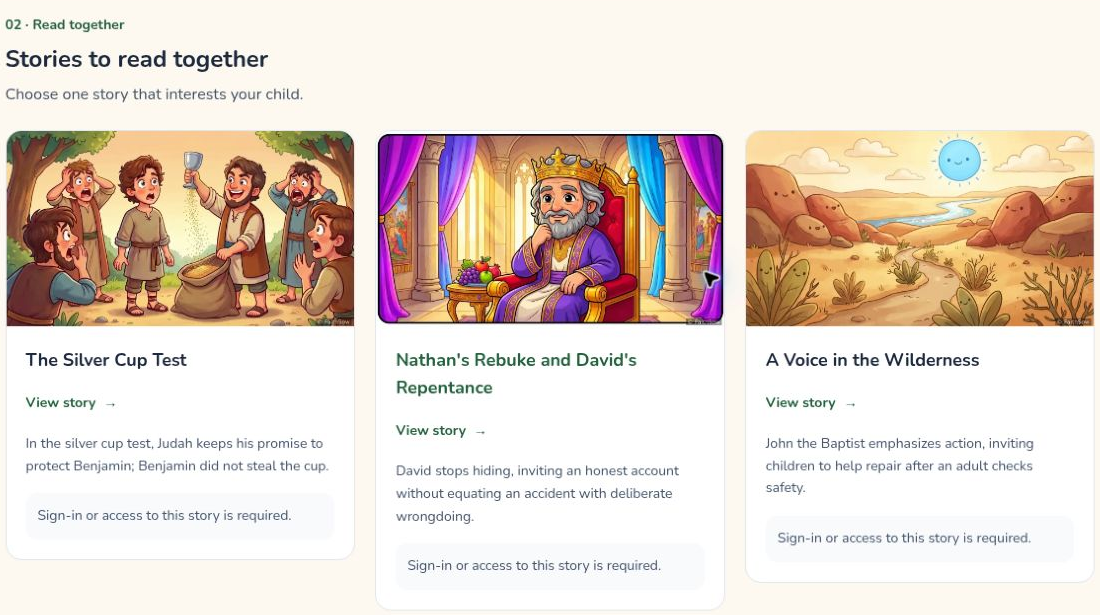
The public page recommends The Silver Cup Test, Nathan's Rebuke and David's Repentance, and A Voice in the Wilderness. Its descriptions connect the stories with keeping a promise, giving an honest account and helping repair after an adult checks safety.
Read those connections carefully. The Silver Cup Test card explicitly says Benjamin did not steal the cup. The David card says not to equate an accident with deliberate wrongdoing. Neither should become a reason to accuse a child or treat a spilled drink as a serious intentional act.
All three cards show a sign-in or story-access requirement. You can use the public question and parent note first, then decide whether to explore a story you can access.
A small next step for today
Return to the public question when everyone is ready to talk. Let your child describe the event in their own way, then agree on one appropriate next step. Focus on a truthful account and a fair share of responsibility, without forcing an admission.