 FaithSow
When your child feels too nervous to enter a new classroom
You arrive at an unfamiliar classroom, and your child holds on to you instead of going inside. Before deciding what to say next, you may want to understand what feels difficult and who could help your child become acquainted with the room.
FaithSow's public situation page starts with those two questions. Its parent note suggests meeting the teacher together and allowing observation or gestures. It also makes an important boundary explicit: nervousness is not a lack of faith.
Ask “What worries you about the new classroom, and who could stay with you?”, then expand For parents. You can use this question and note without opening a full story.
Ask about this room rather than demanding bravery
The situation describes a child clinging to a parent at an unfamiliar classroom. It does not tell you why a particular child feels worried. Use the opening question to listen, rather than treating the page as an explanation of your child's feelings.
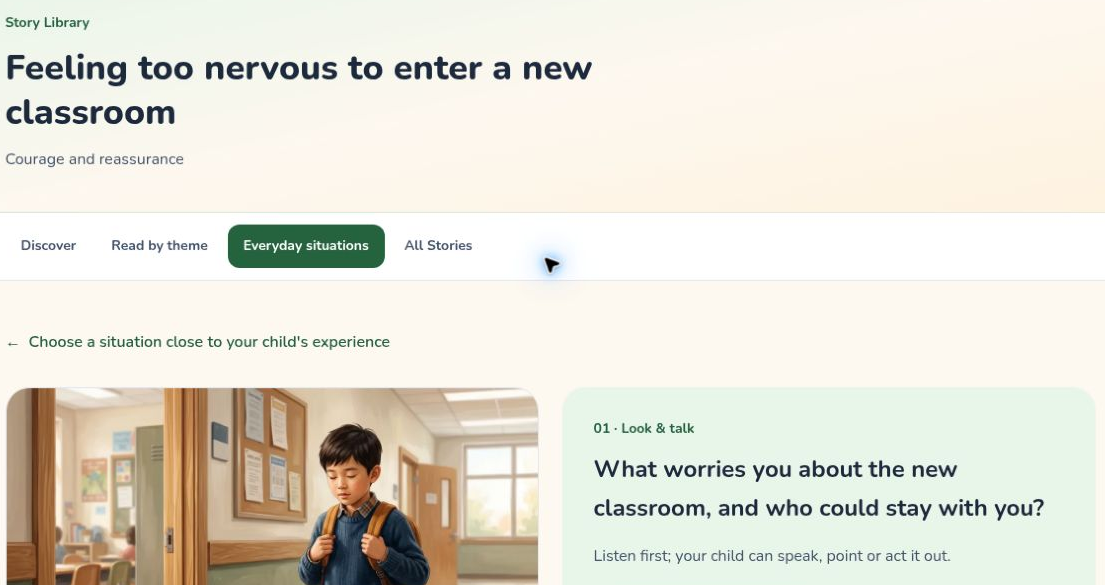
Your child may be able to name a concern, point towards something in the room, or show you through a gesture. The public page explicitly allows speaking, pointing or acting something out. There is no need to turn the conversation into a test of how clearly your child can explain themselves.
An optional parent phrase is: “You can show me what you are unsure about.” This is an example written for this guide, not a line of app dialogue. Listen to what the child actually communicates before choosing a next step.
Make the trusted adult part of the first step
The page asks who could stay with the child. That is a conversation starter, not a promise that a parent can remain in every classroom. Talk with the teacher about what is possible in that setting, and avoid promising an arrangement you have not agreed on.
FaithSow's complete parent note says: “Meet the teacher together and allow watching or gestures; nervousness is not a lack of faith.” Its suggested first action is a shared introduction, rather than an instruction to send the child straight through the door alone.

For example, you could ask the teacher, “Could we say hello together and find out where to start?” Depending on the setting, a child might watch the introduction or offer a small wave instead of speaking. These are author-suggested offline examples. The website does not contact a teacher or arrange a visit for you.
Choose one manageable action without promising an outcome
After hearing the concern and speaking with the teacher, discuss one possible next action. That might be looking at the room together or learning the teacher's name. Choose something that fits the actual arrangements rather than setting a universal timetable for going inside.
An offer such as “Would you like to look first or say hello with me?” is only useful if both choices are genuinely available. If neither fits, work out another option with the adult responsible for the room. The point is to make the next action understandable, not to disguise a demand as a choice.
A child can still feel nervous while considering a small step. This guide does not diagnose the feeling, offer treatment or guarantee that the child will enter the classroom. It gives families a public conversation prompt and examples to consider, not an attendance plan.
Keep reassurance separate from a judgement about faith
The parent note's final sentence belongs with the practical suggestions: nervousness is not a lack of faith. Do not use the recommended stories to tell a worried child that they should be unafraid to prove their belief.
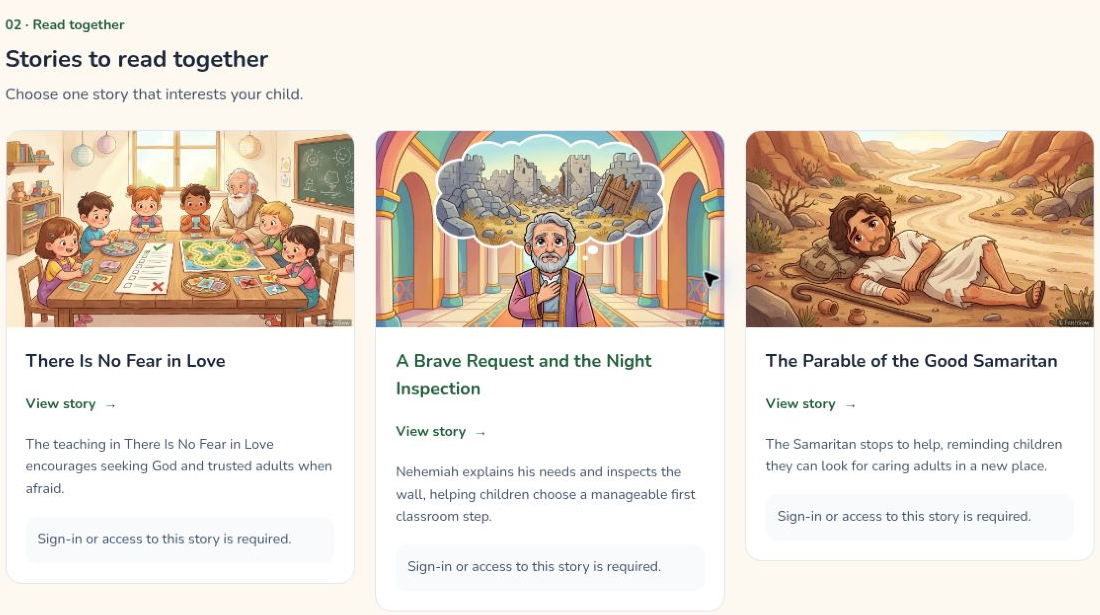
The public page recommends There Is No Fear in Love, A Brave Request and the Night Inspection, and The Parable of the Good Samaritan. Its card descriptions connect these with seeking God and trusted adults, explaining needs and choosing a small step, and looking for caring adults in a new place.
These connections describe the public recommendation cards, not the contents of a full lesson. Each of the three cards requires sign-in or access to that story. You can begin with the public question and parent note, then preview any story you can access before sharing it with your child.
A first conversation before the next visit
Return to the two parts of the question: what is worrying your child, and who could be nearby? Listen to the answer in whatever form your child can offer. Then discuss one realistic next step with the teacher, keeping the child's worry separate from any judgement about courage or faith.