 FaithSow
After the Bible Story: Play, Then Talk Together
A matching game can be a small part of the time you spend together after a Bible story. You do not need to turn every card into a lesson. Read or listen first, play a short round if your child wants to, then invite one response about the story.
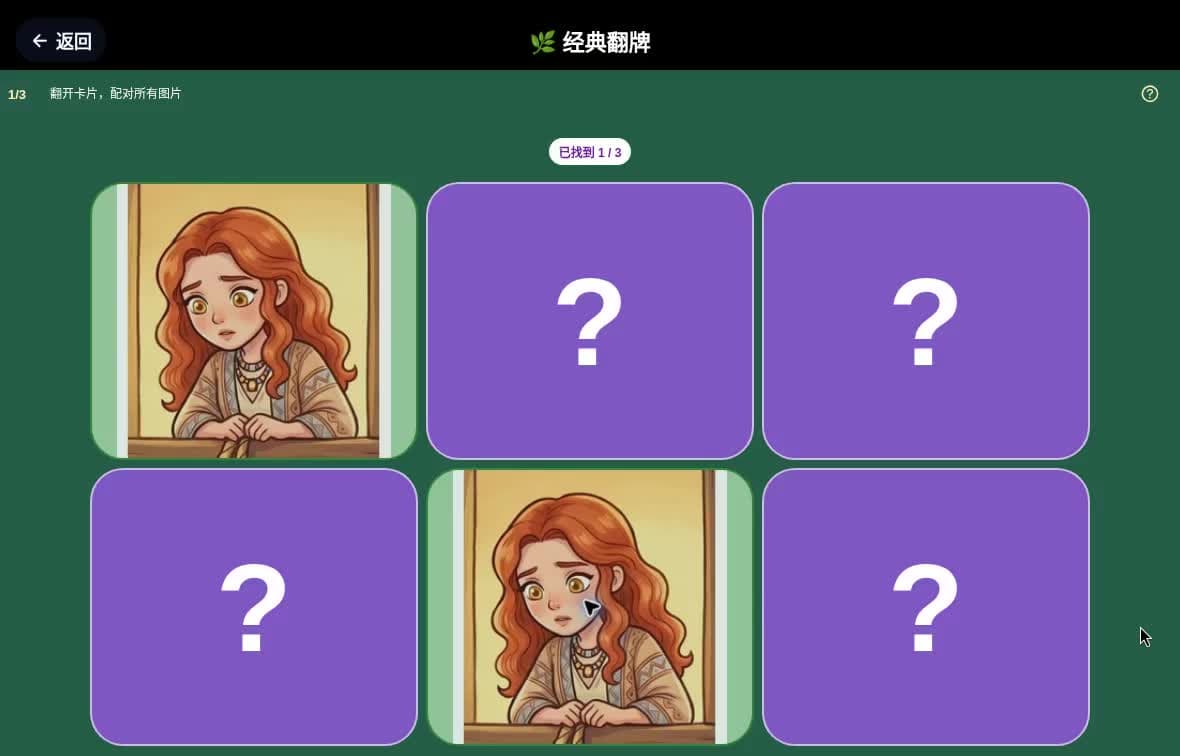
The routine below is a suggestion for parents, not an automatic FaithSow lesson. The screenshot shows one real example of the Classic Memory game in the Chinese web interface. It does not mean every story has this game, the same cards, or a matching set of discussion resources.
Keep one story in view
Before you begin, preview the story and its Bible source. Choose something suitable for your child and read or listen together. You can stop partway through; the purpose is shared time, not finishing a collection.
Ask one easy question before switching activities: “Which part would you like to see again?” Revisit that page if your child chooses one. A pointing gesture or a short answer is enough.
Let the game stay a game
Open a game that is actually available to you and check its instructions. In this example, the screen asks the player to turn cards and match pictures.
Sit beside your child and agree how to share turns. You might say, “Would you like to choose this turn, or shall I?” Give your child time to look before offering help. There is no need to quiz them about Bible facts while they are trying to find a pair.
Notice a match without turning it into a score
The pictured round shows two matching pictures and a counter of 1 of 3 pairs. You can simply acknowledge the action: “You found the same picture.” If a pair does not match, leave room to try again.
Do not use the number of matches to judge how well your child understood the Bible story. Matching pictures and talking about a story are different activities. Stop the game when it no longer feels enjoyable; completing every pair is optional.
Return to the story with one invitation
When you finish playing, return to the story rather than guessing who a game illustration represents. A card may not correspond to the story you just read. If that connection is not clear, keep the two activities separate.
Choose just one of these prompts. They are parent-led suggestions, not promises about questions built into every story.
- “What happened first? Shall we look at that page together?”
- “Which person would you like to know more about?”
- “Was there a part you found confusing?”
- “Would you like to tell me something, show me a picture, or finish for now?”
End with something your child actually said
Reflect a detail back in your own words: “You wanted to see that part again. We can return to it tomorrow.” If a question needs more thought, say so and check the Bible source together later. Do not infer a character’s identity, motives, or emotions from an illustration alone.
If a reviewed prayer or life-application resource is available for that story and suits your family, you can use it. You can also finish without adding either. Not every FaithSow story includes prayer, life application, or a complete seven-step flow.
Choose the language and pace that fit your family
In a bilingual home, begin with the language your child follows comfortably. Check the selected story’s audio and game options rather than assuming every resource is available in every language. The Chinese screenshot here illustrates the game state; it is not an English-interface preview.
FaithSow offers more than 300 Bible stories across its library, audio storytelling, interactive games, and Classroom Mode, with multilingual iOS and Android apps. The 300+ figure describes the overall story collection, not the number of stories in every language or the number of games. Free and paid content are available; check access before planning your time together.
Story content and illustrations are AI-assisted. Parents should review the selected story and compare details with its Bible source. This routine is an invitation to spend time together, not a claim that a game will produce a particular learning or memory result.
Guides for families and teachers
- How to Listen to Bible Stories with Your Child
Plan a simple Bible story listening time with your child, with audio tips, open questions, and ideas for bedtime, car rides, and busy afternoons.
- Choosing Your Child’s First Bible Story
Starting Bible stories with your child? Narrow the choice to two stories you have previewed, check language and access, and begin with a manageable first read.
- How to Prepare a Sunday School Bible Story Lesson
Prepare a Sunday school Bible story lesson with a practical checklist, an adaptable 25-minute outline, and steps for reviewing FaithSow classroom resources.
- Thanksgiving Bible Stories: A Family Reading Guide
Choose an existing Thanksgiving Bible story, plan a flexible family reading time, and revisit gratitude in everyday life with FaithSow's story collection.